
"World Heritage"
500 article(s) found

Introduction to the characteristics of the Flavor and Taste Manor of Jamaican boutique Blue Mountain Coffee
Arthur Philip (Arthur Phillip), the first consul of New South Wales, thought it was the best place for a government supply depot when he first saw Blue Mountain. Later, Gidley King built a prison in the Blue Mountains in 1799, dominated by Irish and Scottish political prisoners, and the scenery can still see Vito, the highest peak of the Blue Mountains.

Coffee cultivation and development in Cuba
Coffee farming in Cuba began in the mid-18th century, with the first coffee farm established by Don Jos Gelabert in Wajay, outside Havana, in 1748. A large number of French and submarine immigrants followed after the outbreak of the Haitian Revolution in 1789.

Indonesia Bali Fine Coffee Bean Kalana Quinta Mani Volcano Ubud Treatment Plant Sunlight Origin Hair
This year Rodney successfully experimented with three different batches, including washing, honey treatment and sun treatment. Three different methods, the flavor greatly exceeded the average batch of origin, the overall defect rate and uniformity were even better than the Central American fine beans. The washing and honey treatment had bright and complex acidity, and the sun treatment batch had even more than the Panama Manor sun batch.

A variety of sun products from the Ubu processing plant of Karana Jinta Mani volcano in Bali, Indonesia.
In the traditional culture of Bali, coffee is used as a cheap beverage raw material. The flavor and quality of the region have been unstable or depressed, and most of them have become cheap commercial beans. Barista Rodney and his partners decided to change the local people's stereotype of coffee. They chose the cultural center of Bali-the Wubu Market area, and opened the island.

Sun planting situation of Fine Coffee beans Karana Jinta Mani Volcano Ubu processing Plant in Bali, Indonesia
Flavor description: raw beans exude strong cantaloupe and tropical fruit aromas; the entrance flavor changes to the sweetness of pineapple and strawberry jam, showing smooth and rich acidity at medium and low temperatures, with aromas of handmade black sugar, exquisite dark chocolate and hazelnut; the overall flavor is excellent, like syrup-like texture and sweet taste, and the ripe fruit flavor of the sun even surpasses many of China and the United States.

Alila Manggis, Bali Cafe
There are no bustling shopping streets in Manggis, a small town in the east of Bali, and Kuta, the main city, and Nusa Dua, a major tourist town in the south. There are scattered village houses, rice paddies and woods all around, and only a few fishing boats roam the coast.
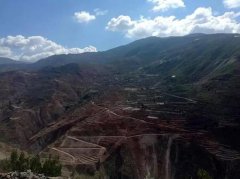
Zhukula-- A place where coffee pilgrims must visit once in their lives.
For the exchange of professional baristas, please follow Zhu Kula, the coffee workshop (Wechat official account cafe_style), the birthplace of coffee in China, where coffee fanatics must visit once in a lifetime. There are 1134 old coffee trees and 24 old coffee trees. On June 16, the big names of the global coffee industry gathered in Zhu Kula. The forum was held in the old church in the village of Zhukula in 131.

Colombia Coffee Bean Environmental Flavor Aroma Introduction
Pay close attention to coffee comment (Weixin Official Accounts vdailycom ) and find a beautiful cafe to open its own small shop. The unique geographical environment creates Colombia coffee Colombia, beautiful mountains, beautiful scenery, pleasant climate, four seasons like spring, fresh air and refreshing. Colombia has a mild climate, air quality and diversity that makes it a harvest season all year round, with no harvest at all.

The unique geographical environment creates Colombian coffee.
Following Cafe Review (Wechat official account vdailycom) found that Beautiful Cafe opened a small shop of its own unique geographical environment created Colombia Coffee Colombia, beautiful mountains and rivers, beautiful scenery, pleasant climate, spring-like all year round, fresh air, refreshing. Colombia's climate is mild, the air is * *, and the diversity of climate makes it a harvest season all year round, different at different times.

Where can I buy the best tea in Malaysia? Which Malaysian tea brand is famous?
In Indonesia, the Southeast Asian archipelago not far from us, they celebrate a unique tea culture in the diversity of scenery and national heritage. In the lyrical songs of mysterious lagoons, looming volcanoes and Komodo monitor lizards, the emergence of tea began with the Dutch in the 17th century; they were eager to learn from people about the planting.

Coffee flavors from different coffee producing areas around the world Coffee production in Cuba
Cuba recorded that there were 2067 coffee plantations in Cuba in 1833. Among them, the earliest seven coffee plantation sites, such as Raglan Piedra, Elkovre, El Salvador and Nisto Perez, are listed as World Cultural Heritage. The seven coffee plantations are the foothills of the Maestra Mountains in the provinces of Santiago and Guantanamo in southeastern Cuba in the 19th century (figure 17 is a postcard).

The cafe culture of Vienna and Austria, not just Starbucks Weiner mixed coffee
Vienna, Austrian coffee plays such an important role in Vienna's urban culture that in 2011 UNESCO listed Vienna's cafes as a world intangible cultural heritage. But some modern coffee connoisseurs believe that these cafes are lagging behind in coffee production technology and services. Because the function of these cafes is a public living room.

General situation of Coffee Industry in China
Coffee, as a traditional western drink, has a long history and cultural heritage.

Coffee industry
Coffee, as a traditional western drink, has a long history and cultural heritage. The world consumes at least 400 billion cups of coffee every year, and the current annual global coffee consumption is about 10 million tons. Coffee is the first of the two largest drinks in the world, and it is also the second largest trading commodity in the world after oil.
Coffee producing areas in Cuba
The establishment of the earliest seven coffee plantation sites, including Raglan Piedra, Elkovre, El Salvador and Nisto Perez, are listed as World Cultural Heritage. The seven coffee plantations were reclaimed in the 19th century on virgin land in the foothills of Maestra (postcard in figure 17) in the southeastern provinces of Santiago and Guantanamo. Coffee production in Cuba: Cuba (Cuba)
Basic knowledge of boutique coffee Cuban coffee
According to records, there were 2067 coffee plantations in Cuba in 1833. Among them, the earliest seven coffee plantation sites, such as Raglan Piedra, Elkovre, El Salvador and Nisto Perez, are listed as World Cultural Heritage. These seven coffee plantations are located in the foothills of Maestra in the provinces of Santiago and Guantanamo in southeastern Cuba in the 19th century (figure 17 is a postcard).

Coffee production in Cuba
In 1833, Cuba had 2067 coffee plantations. Among them, seven coffee plantation sites, such as La Gran Piedra, Elkofre, El Salvador and Nisto Perez, which were the earliest established coffee plantations, are listed as world cultural heritage sites. These seven coffee plantations were established in the 19th century in the foothills of Maestra in the provinces of Santiago and Guantanamo in southeastern Cuba (postcard in Figure 17).
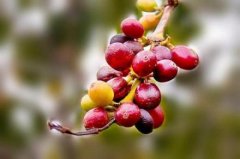
The characteristics and Market of Cuban Coffee
According to records, there were 2067 coffee plantations in Cuba in 1833. Among them, the earliest seven coffee plantation sites, such as Raglan Piedra, Elkovre, El Salvador and Nisto Perez, are listed as World Cultural Heritage. These seven coffee plantations are located in the foothills of Maestra in the provinces of Santiago and Guantanamo in southeastern Cuba in the 19th century (figure 17 is a postcard).
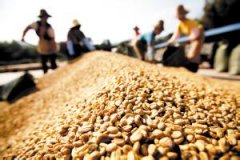
High-quality coffee bean producing countries introduce Cuban coffee
According to records, there were 2067 coffee plantations in Cuba in 1833. Among them, the earliest seven coffee plantation sites, such as Raglan Piedra, Elkovre, El Salvador and Nisto Perez, are listed as World Cultural Heritage. These seven coffee plantations are located in the foothills of Maestra in the provinces of Santiago and Guantanamo in southeastern Cuba in the 19th century (figure 17 is a postcard).

Global coffee producing area-Cuba
According to records, there were 2067 coffee plantations in Cuba in 1833. Among them, the earliest seven coffee plantation sites, such as Raglan Piedra, Elkovre, El Salvador and Nisto Perez, are listed as World Cultural Heritage. These seven coffee plantations are located in the foothills of Maestra in the provinces of Santiago and Guantanamo in southeastern Cuba in the 19th century (figure 17 is a postcard).